2008. április 29., kedd

2008. április 28., hétfő


2008. április 27., vasárnap
2008. április 26., szombat
Various - Ono Norway (2007)

Discogs
Download (rapidshare, splitted with Total Commander):
Download link (Part1)
Download link (Part2)
Egon Schiele (1890-1918)

Egon Schiele was born in the city of Tulln, Austria. At the age of just 15 years old Schiele's father died of syphilis and Egon Schiele's custody was granted to his uncle who recognized and was a proponent of Schiele's artistic talent. At the age of 16 Schiele applied at Kunstgewerbeschule in Vienna, Austria where Gustav Klimt had also studied. Shortly after his arrival to his new school, Schiele was transferred to a different school the Akademie der Bildenden Künste. There he studied drawing and painting but felt suffocated by the school’s conservative nature. In 1907, Schiele sought out Gustav Klimt who was a role model for the young artist. Gustav Klimt was said to encouraged Schiele by buying his drawings and providing him with opportunities. Klimt invited Schiele to exhibit his work at the 1909 Vienna Kunstschau, where Schiele encountered the works of Edvard Munch.

At this point in time Shiele's work began to flourish and he began to explore, not only the human form and sexuality with his work. To some his art would considered shocking but captured the publics interest. Schiele's lifestyle was also become more complex and diverse; in April 1912 he was arrested for seducing a young girl below the age of consent. When the police came to his studio to place him under arrest they had seized more than one hundred drawings which they considered pornographic. Schiele was imprisoned but soon after the charges of seduction and abduction were dropped yet the young artist was found guilty of exhibiting erotic drawings in a place accessible to children. He was sentenced to only 24 days imprisonment.

During the time that Schiele spent in prison he created a series paintings depicting the emotions he felt from his imprisonment. Schiele was married in 1915. In 1918 he was invited to the Secession's 49th exhibition. Schiele had more then forty works displayed in the exhibition. The exhibit was a major success for the artist created a great deal of recognition for the artist.Later that year the Spanish flu epidemic claimed both the lives of Egon and his pregnant wife Edith. Schiele's final work were all painted of his beloved wife.
2008. április 23., szerda
2008. április 22., kedd
Death In June - Paradise Rising (1992)

Death In June is the musical brainchild of English folk musician Douglas Pearce, better known as Douglas P. Death In June was originally formed in Britain in 1981 as a trio, but after the other members left in 1985 to work on other projects, the group became the work of Douglas Pearce and various collaborators. Pearce now lives in Australia.
Over Death In June's two decades of existence, numerous shifts in style and presentation have occurred, resulting in an overall shift from initial post-punk and Industrial Records influence to a more acoustic and folk music-oriented approach. Although sometimes considered controversial, Death In June has become very influential in certain post-industrial musical circles. Pearce's influence was instrumental in sparking neofolk, which his music has subsequently become a part of.
Hortobágyi László - Fata-organa (2000)
 Download
Az orgona, s vele a zene kettős arculatának, egyszerre fenséges és őrületbe átörvénylő hangzáslehetőségeinek megszólaltatása kivételesen sikerül úgy, mint Hortobágyi lemezén. Szerzője a világzene művelőjeként vált világszerte ismertté, de a világ zenéjében is otthonos. Hosszú időn keresztül tanulmányozta az általa a „zenei anyagában a legelidegenedettebb európai, zene-mérnöki magasművészet”-nek nevezett orgonairodalmat. E lemez anyagát 1976 óta gyűjtötte, „virtuális” orgonája ugyanis számos magyar- és külországi instrumentum hangzásából állt össze: a sípsorok egyenként felvett hangja digitalizálva és összehangolva szólal meg. A pillanatonként tisztára hangolt akkordok így egyedülálló, nem temperált orgonahangzást alkotnak. Nem feltétlenül feltűnő különössége még a lemeznek, hogy indiai zenei struktúrán, shruti-hangsorokon alapul. Annál nyilvánvalóbb egy további Európán kívüli zenekultúra, az arab-mozlim kultikus ének jelenléte. A Korán 1. szúrájának újra és újra felhangzó variációi hallatán akár mozarab orgonamisének is vélhetné egy gyanútlan hallgató.
A kultikus zenék ilyetén keresztezése nem feltétlenül szentségtörő: a két meglehetősen különböző vallás a misztikájában kerül a legközelebb egymáshoz, ennek pedig legmagasabbrendű kifejeződése az énekhang. A koránénekeshez képest az orgonahang ugyan nem ének, de az orgonasípok az emberi hangot utánozzák. Az orgona az egyházat mint kórust reprezentálja: az énekesek és zenészek kórusa, a "mennybéli canticum" elôvételezése. Ez az „előtörténet” az orgona felhangzásakor ma is meghallható; hangja a zene transzcendens távlatát egyedülállóan hordozza.
A különböző zenekultúrák fényében az orgona kettőssége még feltűnőbb. Az énekesek, a kórus helyén sípok, vezetékek, billentyűzetek bonyolult architekúrájú építménye szól. A gépezet az emberek helyén. De a legkomplexebb kézműves technológiával készült instrumentum nemcsak e zeneféleség, hanem minden egyéb eszköz (organon) és technika kettős arculatát is kifejezi. A működésen túlmenően a működtető és a gépezet megszaladásának lehetőségét. A Fata-organa egyes darabjaiban ez is hallható. Mint ahogy a „az emberi nyomorúság évezredes párlata (és) az abból való szabadulás művészet-technikái” is megszólalnak, és olykor lenyűgöző hangokat hallatnak.
Hortobágyi László: FATA-ORGANA (BMC CD 039, Bp. 2000.)
Daisy Chainsaw - Eleventeen (1992)

We love you yeah
We love what you got and you've got it truly
You're talented kid
We can see it clearly
We love your sound
The way you look so we say sincerely
You're natural stars and we mean it really{chorus}
We love your money(Love your money)
We love your money(Love your money)
We love your money(Love your money)
We love your money(Love your money)
Yes we do
We love you yeah
place your trust in us completely
You'll sell worldwide we mean it really
We love your songsshape your image and we'll all be wealthy{repeat}
We love you so love your demo
We love you so love love love love
all your money
We love your money(love your money)
We love your money(love your money)
Love love love love all your money(repeat chorus)
Love love love love all your money
Love love love love all your money
Love love love love all your money
2008. április 21., hétfő
Bat For Lashes - Fur And Gold (2007)

Opener "Horse and I" skirts Renaissance Faire silliness, but proves musically intriguing enough to push past any hokey aesthetic choices. Yes, Khan can come off as a bit dramatic, but her best songs fit the part. "Trophy" is perhaps the album's finest track, plodding along elegantly like a darker and slicker Lavender Diamond. "Tahiti" is the sonic standout, but suffers from some jarringly awkward phrasing in its chorus. "Sad Eyes" never quite fulfills the emotional potential generated by Khan's voice and some sparse piano chords, and it also illustrates a wider point: Uncomplicated and vaguely mystical lyrics generally make sense here, but Khan occasionally sings like she's not really sure what she's saying. An unexpected "Come and spend the night" halfway through "Sad Eyes" might as well be "I'd like a burrito."
Many of the album's biggest disappointments come simply because the band's potential is so palpable, especially during more restrained and focused moments. But as strong as Fur & Gold's individual tracks can be, the record as a whole is frustratingly dilute. While Khan has a real talent for edging towards emotional extremes, she seems to get lost in atmosphere. And ultimately, Fur & Gold sounds a little bit too comfortable for its own good. Khan is a great singer, and her band is undoubtedly competent and capable, but the record sounds like it wants to be more than it is. Khan stops just short of the boldness that can make this kind of record great-- imagine Björk wearing a fur coat rather than a dead swan or Siouxsie Sioux wearing a peasant dress rather than a Nazi uniform. Bat For Lashes dip their feet in some difficult waters, but often seem too preoccupied with their reflection to jump in.
- Matt LeMay, February 08, 2007
Antony and the Johnsons - I Am a Bird Now (2005)

Besides being a tight aesthetic move, the image also links Antony to the early fabulousness of downtown New York, reminding the informed viewer not only of Darling's too-early death from leukemia, but the AIDS-related passing of the photographer himself, Peter Hujar in 1987 (the same year Warhol died, following routine gall bladder surgery). Klaus Nomi was already buried by then, and the Downtown scene was getting too close to saying goodbye to Cookie Mueller, Keith Haring, David Wojnarowicz, and Antony's sometime doppelganger Leigh Bowery (the subject of Boy George's musical Taboo), among others-- all victims of the AIDS virus.
This visual meditation on death and radical history smoothly conjures the family tree upon which pale, angelic Antony perches. The vocalist/pianist moved from California to NYC after seeing the documentary Mondo New York, lured by the 1980s cabaret scene it depicted. Quite fittingly, his first performance came with a musical troupe called Blacklips at the famed Downtown venue, the Pyramid. Jump now to 2003, when Antony opened for Lou Reed and sang the Velvet Underground classic "Candy Says" (yes, for Candy Darling) as an encore after most performances. Knowing all of this-- the very important history in that cover-- helps to understand the melancholy, sense of loss, and rapturous joy in these 10 tracks.
But however aesthetically intriguing and complex that history may be, the ultimate draw is Antony's voice, and within the first two seconds of the album, it should be very clear to even the most unaware newbies that Antony has an amazing Nina Simone/Brian Ferry/Jimmy Scott vibrato, a multi-octave siren that would sound painfully lovely no matter what he was saying. Lucky for us, he fills that promise with worthy syllables. The greatness of this downcast crooner is the melding of that otherworldly trill with a dark, powerful aesthetic. Looking past his sad eye make-up and kewpie-doll features are these mesmerizing songs about loving dead boys, plaintive letters from hermaphroditic children, the fear of dark lonesome purgatories, breast amputation, the fluidity of gender. The first words of "Hope There's Someone" and of the album "Hope there's someone who'll take care of me/ When I die" feel more lonesome than just about anything and then there's the rapturous promise of "For Today I Am A Boy"' that "One day I'll grow up and be a beautiful woman/ One day I'll grow up and be a beautiful girl".
I Am a Bird Now's majesty didn't come easily: Antony's self-titled debut was released five years ago on David Tibet's Durtro label, but only now has he found the perfect mix between style and substance. More stripped down than earlier offerings-- most of the focus is on piano and voice, although violin, viola, cello, sax, and flute are also heard-- there's no missing Antony's thoughtful words.
There are a number of guest vocal spots-- Devendra Banhart (gypsy incantations in the beginning of "Spiralling"), Boy George ("You Are My Sister"), Rufus Wainwright ("What Can I Do?"). All of these powerful singers are overshadowed by Antony's angelic chops, though Boy George ends up turning in a surprisingly moving performance. His duet with Antony explores private memory, brotherhood/sisterhood (regardless of gender), relationships, empowerment ("I was so afraid of the night/ You seem to move to places/ That I feared"), and wish fulfillment. (Really, grab the hankies.)
For his part, longtime Antony fan/champion Lou Reed does a little spoken "I was lying in my bed last night" intro and some chunky guitar chords on the doo-wop horn swagger of standout "Fistful of Love", which works itself up to a frothy Otis Reading devotional to love's bruises and the comfort of a familiar fist: "I accept and I collect the memories of your devotion on my body".
The mingling of friends is a treat but, heart in his hand, Antony can more than ably go it alone-- even though he spends so much of I Am A Bird Now fearing solitude and celebrating those rare perfect connections. Then again, in this carefully laid out record, the final track, "Bird Gurl", leads quite dramatically to full-fledged climax as our hero searches for and finds wings, finally taking a solo flight. Contrast this with the pathos of the opener's fear of falling asleep and that "middle place" between light/life and darkness/death. Of course, when the album begins again, so does the reality of perhaps having nobody to hold an aching dying head. But then, so does Antony's riveting trip towards his airborne epiphany. And on the cover, Candy's flowers remain in bloom.
- Brandon Stosuy, February 10, 2005
Cocorosie - La Maison de Mon Rêve (2004)
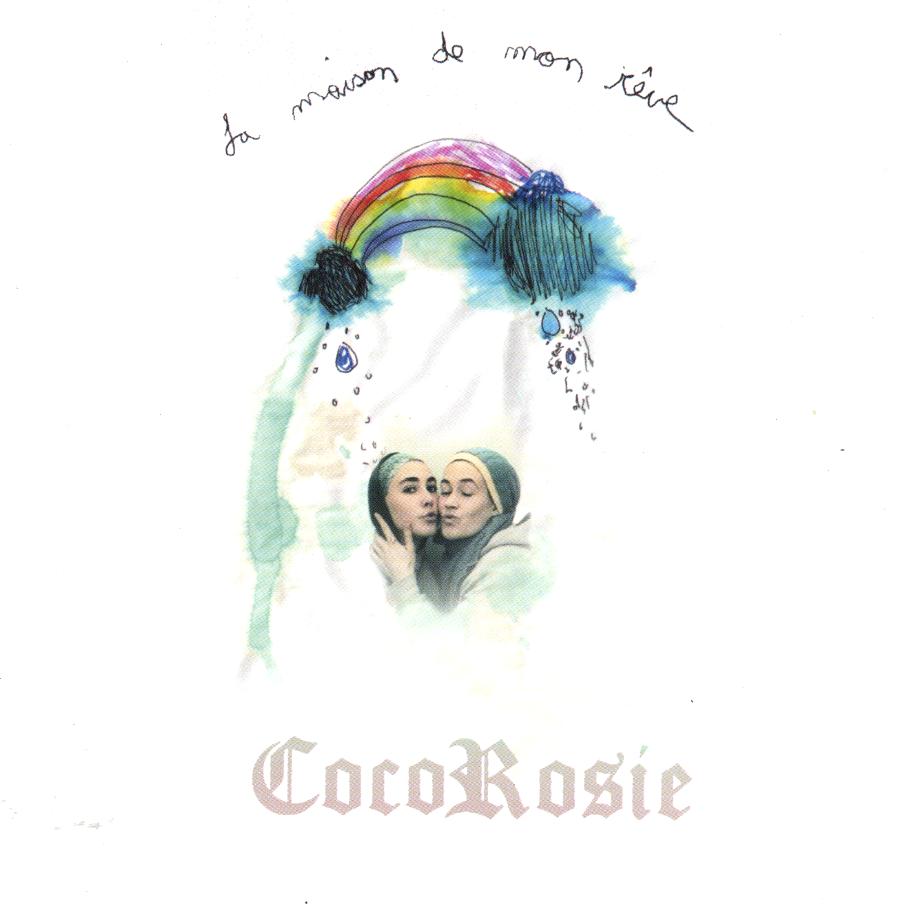
For musicians with star ambitions, a well-practiced public facade is an evil necessity; it's what divides mainstream from underground. The shortest (if not only) route to pop stardom is to lube-up and fake your way through the capricious and unapologetic record industry gauntlet. Play your public relations cards right, and you may one day earn an outside shot at winning a contract with a major label subdivision. From there, you're at the mercy of American teenagers.
And yet, there are those who proudly wear the makeup but manage to smuggle some illegal substance underneath. Bj�rk, Beck, and the Smashing Pumpkins all had at least one great album to their credit in the last decade that were nothing if not MTV-ready. CocoRosie, a Parisian vocal duo comprised of sisters Sierra and Bianca Cassidy, may one day be such a group. Judging by their promotional 8x10s, in which the sisters purse for the camera doused in copious amounts of Cabaret-style rouge and mascara, they've already got the makeup part down pat.
Brace yourself for a high school French reprise: CocoRosie have a verifiable case of Francophilia. La Maison de Mon Reve translates literally to "the house of my dream," and the title is just the beginning: The album was recorded in Paris in the springtime, and beams with all the lazy romanticism of an unemployed Upper East-Sider on expat life-delay. But never mind the superficial reasons for disliking the Cassidy sisters; not just any bored globetrotters could pull something this elegant and sonically intriguing out of their trust-funded asses.
Musically speaking, La Maison de Mon Reve is an ingratiating album that suffers only from its sometimes overbearing affectation. The familial duo have garnered vast acclaim for their effortless melding of blues and hip-hop, a putatively groundbreaking bridge that CocoRosie are far from the first to cross. Relatively speaking, blues and hip-hop share a lot in common; crooning fragile melodies over boombox beats isn't going to cure cancer, now or ever. In fact, what CocoRosie have done with original source material on La Maison de Mon Reve is essentially what Danger Mouse attempted to do with existing music on his lauded The Grey Album: They've overdubbed two styles of music, generationally removed but deceptively similar, and the result is closer to the mean of its parts than the sum.
That doesn't stop the Cassidy sisters from crooning unabashedly within the cozy walls of this cold-water flat. On paper, some of the lyrics are doggone cringe-worthy, but lines like, "I fell in love with you/ Just because the sky turned from grey to blue," and, "All I want with my life/ Is to be a housewife," are delivered passionately enough to slide by unnoticed. The particularly guileless "By Your Side" and "Butterscotch" are even more impressive for their ability to transcend their shortcomings.
Like any truly cosmopolitan city, La Maison de Mon Reve draws from a rich past of diffuse influences while simultaneously seeking to make use of modern resources. That much is apparent from the opening cut, "Terrible Angels", a bucolic blues paean that slyly incorporates sporadic synth blips and what sounds like the metallic squeal of a rusted swingset. Delta blues is a prominent influence throughout the album, and the backwater vocals are coolly affected and instantly appealing. Unfortunately, the Cassidys' entreaties wear thin over repeated listens. Both sisters possess the type of coy yet wracked and powerful voice that has vaulted artists like Fiona Apple and Nelly Furtado to stardom, even while the band's roots are planted in the indie loam, right beside their Touch & Go compatriots TV on the Radio.
A lot of words have been wasted trying pigeonhole this album into a genre, and the general consensus seems to be that La Maison de Mon Reve is impossible to define outside its own Bohemian splendor. If you're trapped in a Parisian idyll, maybe, but here in suburbia, the album is about as romantic as a clod of freshly mown grass. CocoRosie are transparent and derivative, yet immensely promising. If they can overcome the insular boundaries of their make-believe world, they might one day produced something utterly spectacular. But they're in no hurry; was a woman who thought she was well-dressed ever cold?
- Sam Ubl, March 11, 2004

Labradford - Mi Media Naranja (1997)

Mi Media Naranja is a much more cinematic-sounding album. The first two tracks sound like the theme to an extremely cool western film. The first track consists of a sparse, desert-like guitar melody and lovely organs. Then a haunting violin melody and rapid drumbeat kick in, pushing the song on and on. The second track is more of the same, except the violin is replaced with a forlorn slide guitar and the drums are replaced by rhythmic bursts of static.
Part of the reason this album sounds so cinematic is the virtual lack of vocals. Before, Labradford’s music always featured offbeat, stream of consciousness lyrics, sung/whispered underneath the chilly music. On Mi Media Naranja the vocals come in the forms of static-y washes and snippets of children laughing, like Labradford eavesdropped on some CB communication or tapped the telephone wires in dying town.
My favorite track is the probably the third one, which might be a distant cousin to “Pico,” my favorite track off of their previous release. The most noticeable piece of this song is the beautiful, gentle organ melody. More sparse percussion and guitars can be heard, while the bass provides a harsh counterpart to the organ. Distorted, faraway snippets of children’s vocals, radio transmissions, and satellite-like pulses are also filtered throughout the piece that’s a soundtrack for a faraway glance.
The next track is something to listen to out under the stars, in some roofless club. Gentle, vibrating tones and crystalline vibes sound out like the sparkling stars, while the melody sounds almost lounge-ish, in a celestial sort of way. Something to sip martinis to, while looking through your telescope?
Labradford has done a wonderful job, moving away from the “isolationist” ambience of their early stuff, which I still don’t really care for. That stuff sounds almost juvenile and sloppy when compared to their newest stuff. They’ve really created a beautiful piece here, that manages to be sparse and minimal while remaining emotional and moving. There’s still a distant, faraway slant to their music, but it’s one that invites you to join them where they are. My advice? Go with them and leave everything else behind."
- http://opuszine.com/music_reviews/review/labradford_mi_media_naranja/
Holy Fuck - LP (2007)

"Find something in the trash... plug it in": So reads the message next to the photo at the top of Holy Fuck's MySpace, and it's a good starting point for describing their sound. Founded by Toronto musicians Brian Borcherdt and Graham Walsh in 2004, the band's basic setup is simple: a ton of drums, keyboards, and electronic noise generators. All of their instrumental music is created through a process of improvisation and refinement, and the lineup is somewhat elastic from show to show, which adds an extra element of unpredictability to the development of each piece.
I felt that their 2005 debut, while it had a few jaw-dropping moments, demonstrated mostly potential, but you can pretty much forget potential on LP. This album is leagues better than the debut, an exciting blend of aggressive rhythm and nuanced, skillfully manipulated noise. The band has developed every song on the record and captured them in raw, live performance (in the case of opener "Super Inuit", in front of an audience). The result is frequently exhilarating, a cyborg dance party for a broken future that's closer than you think.
One of the band's greatest assets is its dual drummers. By having more than one guy at a kit, Holy Fuck give themselves a rhythmic foundation that's at once solidly in the pocket, incredibly loud, and versatile enough to embellish the songs without losing the lockstep groove at the album's heart. One of the album's biggest and most pleasant surprises is "Lovely Allen", the most song-like thing the band has done and certainly the prettiest-- though I'd be remiss to call it pretty without also explaining that the brutal ugliness of the rest of the arrangement is what makes the keyboard melody sound so exceptionally beautiful. Most of these songs incorporate at least one bit of rhythmic keyboard programming to further unite the drums with the buzzing, whooshing clouds of ambient sound spilling over the top.
Though it's taken from multiple recording sources, the album sounds reasonably unified, mostly because the important thing is to capture the group at its rawest and most inspired, which it consistently does. We often say casually that bands are "awesome" without thinking about the true meaning of the word-- Holy Fuck actually inspire awe during their best moments.
- Joe Tangari, November 14, 2007
2008. április 18., péntek


2008. április 17., csütörtök


2008. április 13., vasárnap
Pre-Post

- Main Entry: gad·about
- Pronunciation: \ˈga-də-ˌbau̇t\
- Function: noun
- Date: 1837
